
Table of Contents
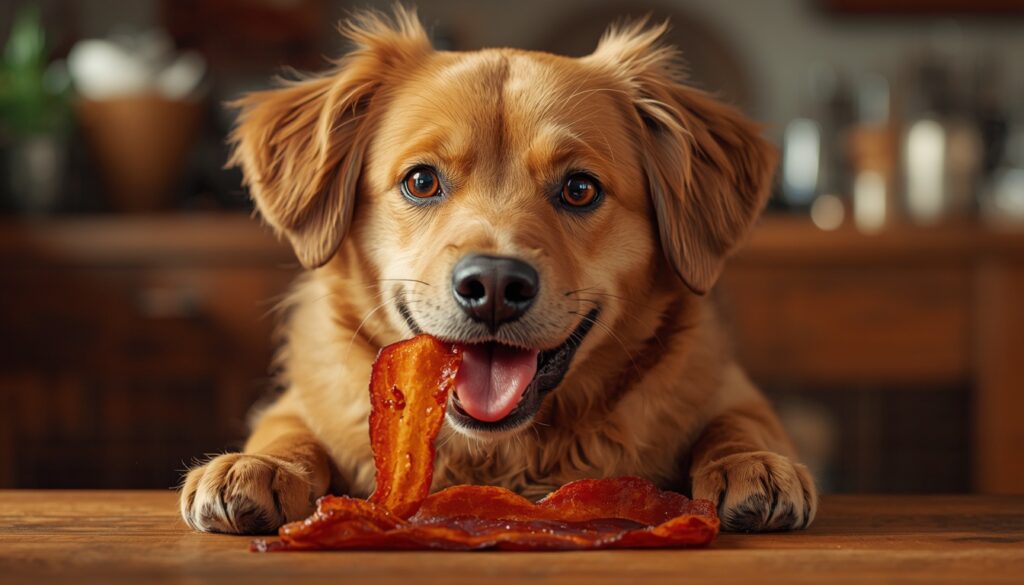
There’s a very common scene in kitchens everywhere that says a lot about how dogs think. You cook bacon in the morning, the smell fills the room, and suddenly your dog appears as if they were summoned from another dimension. They’re not barking or panicking. They just sit there quietly, staring at you like you’re making the most important decision of their lives.
That moment is where most owners start negotiating with themselves. “Just a tiny piece won’t hurt…” is usually the thought that follows.
But bacon is one of those foods that looks harmless on the surface while carrying risks that are easy to underestimate. It’s not about panic or exaggeration—it’s about understanding how a dog’s body reacts to processed, fatty human food.
Let’s break it down in a realistic way.
Can Dogs Eat Bacon Safely?
Dogs can technically eat bacon in very small amounts, but it is not considered a safe or recommended treat for regular feeding.
Bacon is not toxic in the same way chocolate or grapes are, but its composition makes it problematic for dogs, especially when given more than once or twice.
A single tiny bite from a healthy dog will not usually cause immediate danger. However, the issue is not one moment—it’s the accumulation of risk over time or the reaction of sensitive dogs.
Many pet owners assume that because bacon is “just meat,” it must be fine. In reality, bacon is heavily processed, high in fat, and extremely salty compared to natural meats dogs are adapted to eat.
That difference matters more than people think.
Why Dogs Are So Attracted to Bacon
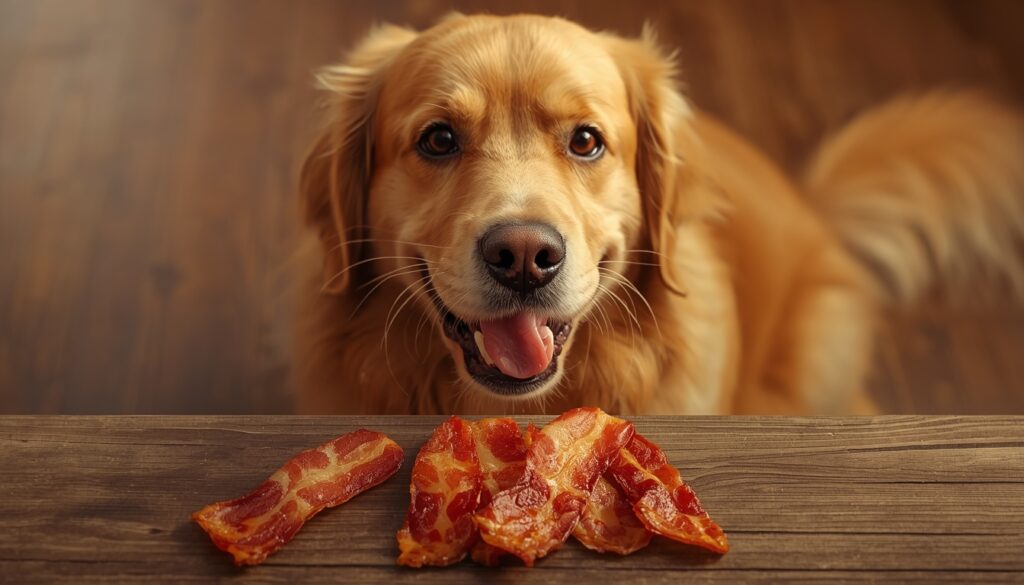
Dogs don’t “choose” bacon emotionally—they react to it biologically.
Bacon is:
- extremely high in fat
- very salty
- rich in strong aroma compounds
This combination triggers a powerful reward response in dogs. Even dogs that are normally picky with food will often become highly focused when bacon is around.
A vet behavior example often seen in clinics is dogs that refuse kibble but suddenly show intense interest in bacon during training demonstrations. This is why bacon is sometimes used in tiny amounts as a “high-value reward.”
But attraction does not equal safety.
Is Bacon Good for Dogs in Any Way?
Strictly speaking, bacon is not a healthy food for dogs. However, there are a few limited situations where it might seem useful.
1. High-value training reward
Some trainers use a very small piece of bacon to reinforce difficult commands in highly distracting environments.
2. Temporary appetite stimulation
In rare cases, a small piece might encourage a dog with low appetite to start eating again.
3. Motivation tool
Because of its strong smell and taste, bacon can sometimes be used to capture attention during training.
But all of these uses come with risks, which is why veterinarians generally recommend healthier alternatives.
The Real Risks of Feeding Bacon to Dogs
This is where bacon becomes more serious than it appears.
1. Pancreatitis risk (major concern)
One of the biggest dangers is fat overload.
Bacon is extremely fatty, and high-fat foods can trigger pancreatitis—a painful inflammation of the pancreas.
This condition can appear suddenly and may require veterinary treatment.
Common symptoms include:
- vomiting
- abdominal pain
- loss of appetite
- lethargy
Small breeds and overweight dogs are especially at risk.
2. High sodium content
Bacon contains a large amount of salt.
Too much sodium can cause the following:
- excessive thirst
- dehydration
- electrolyte imbalance
In extreme cases, salt overload becomes dangerous, especially for small dogs.
3. Digestive upset
Not all dogs process fatty foods well.
Even a small piece of bacon can cause the following:
- diarrhea
- vomiting
- gas
- stomach discomfort
This is more common in dogs with sensitive stomachs.
4. Processed meat concerns
Bacon is not fresh meat—it is processed.
It often contains:
- nitrates
- preservatives
- curing agents
These are not ideal for regular consumption and add unnecessary strain on a dog’s digestive system.
5. Long-term weight gain
Because bacon is calorie-dense, even small frequent portions can lead to gradual weight gain.
Owners often underestimate how quickly “small treats” add up over time.
How Much Bacon Can a Dog Eat?
If a dog is healthy, a very small bite occasionally is usually tolerated.
General guidance:
- Small dogs: a tiny piece rarely
- Medium dogs: small bite occasionally
- Large dogs: slightly larger bite, still rare
But the key word is “rarely,” not “regularly.”
Bacon should never become part of a daily treat routine.
Healthier Alternatives to Bacon
If you want something dogs enjoy without the risks, there are much better options:
- boiled chicken (plain, no seasoning)
- turkey (unseasoned)
- lean beef (cooked simply)
- carrots
- apple slices (no seeds)
- commercial training treats designed for dogs
These options provide reward value without excessive fat or salt.
Can Puppies Eat Bacon?
Puppies should not be given bacon.
Their digestive systems are still developing, and they are more sensitive to:
- high fat
- salt
- processed foods
Even a small amount can easily upset their stomach.
When Bacon Becomes Dangerous
Bacon becomes significantly more risky when
- it is given in larger amounts
- it is eaten frequently
- bacon grease is consumed
- the dog has existing health conditions
Dogs with a history of pancreatitis or obesity should avoid it completely.
Frequently Asked Questions
Can dogs eat cooked bacon?
Yes, but only in very small amounts and not regularly. Cooking does not remove fat or salt.
Can bacon cause pancreatitis in dogs?
Yes. High-fat foods like bacon are a known trigger for pancreatitis.
What should I do if my dog eats a lot of bacon?
Watch for vomiting, diarrhea, or lethargy, and contact a vet if symptoms appear.
Is turkey bacon safer than regular bacon?
It may contain less fat, but it is still processed and not ideal for dogs.
Can dogs eat bacon fat or grease?
No. Bacon grease is even more concentrated in fat and can be more dangerous than the meat itself.
Conclusion
Bacon is one of those foods that dogs love instantly, but their bodies are not designed to handle it regularly.
While a tiny occasional bite is unlikely to harm a healthy dog, the combination of high fat, high salt, and processing makes it a risky treat overall.
The safest approach is simple: bacon should stay an occasional exception, not a routine snack.
For everyday rewards, lean, unseasoned proteins or dog-safe treats are always a better choice for long-term health and stability.